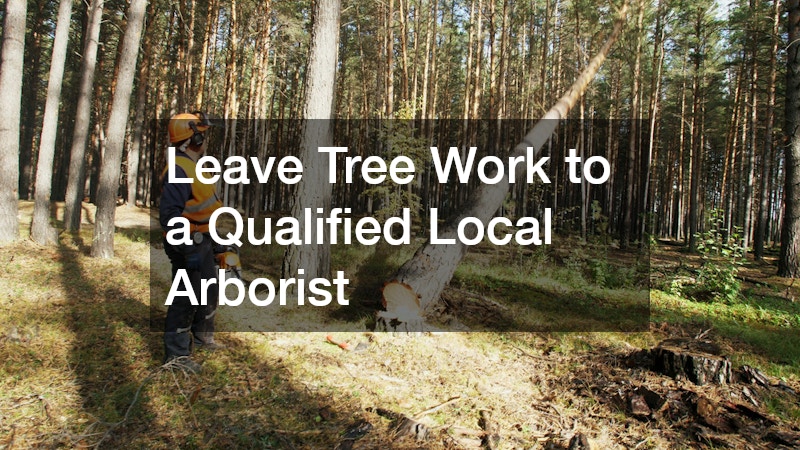
In a healthy neighborhood landscape, trees serve as living infrastructure that supports beauty, shade, and ecological balance. Working with a qualified local arborist is essential because improper tree care can damage not only individual trees but also the surrounding environment. Professional tree care follows sustainable practices that protect long-term tree health and preserve the ecosystems they support.
Why You Should Hire a Qualified Local Arborist
DIY tree work may seem affordable, but it carries significant risks. Without proper training, homeowners can face serious injuries, property damage, or legal issues.
Tree care requires more than tools and effort. It demands a solid understanding of tree biology, structure, and safety procedures.
A professional arborist brings specialized training and hands-on experience to every job. They can detect early signs of disease, pest infestations, or structural weakness that often go unnoticed. With this knowledge, they apply targeted solutions that promote long-term tree health and environmental responsibility.
Another key benefit is familiarity with local regulations. Tree work may require permits or compliance with municipal guidelines. Arborists understand these requirements and help property owners avoid fines or disputes, ensuring projects move forward efficiently.
Tree diseases often progress quietly until serious damage occurs. A local arborist can identify issues early and use integrated pest management techniques to limit the spread and environmental impact. This proactive approach protects both individual trees and the surrounding landscape.
Safety is central to professional tree work. Arborists are trained to assess risk and manage complex situations with minimal disruption. Their expertise protects people, property, and nearby wildlife.
How to Choose the Right Arborist for Your Needs
Credentials and certifications should be a top priority when selecting an arborist. Recognized certifications indicate proper training, adherence to safety standards, and a commitment to ongoing education.
Experience is equally important. Arborists with a wide range of project experience are better equipped to handle diverse challenges. Some may specialize in areas such as disease management or urban forestry, which can be valuable depending on your needs.
Reviewing past work helps gauge an arborist’s capabilities. Portfolios and client feedback offer insight into their problem-solving approach and attention to detail.
Cost transparency is also essential. A clear breakdown of services and pricing allows for informed budgeting and avoids surprises. Open communication builds trust and sets expectations early.
Strong communication skills contribute to a smooth process. Arborists who explain recommendations clearly and respond promptly help ensure successful outcomes.
What Services a Local Arborist Can Provide
Tree pruning and trimming are essential for maintaining health, safety, and appearance. A skilled arborist makes precise cuts that encourage healthy growth and extend a tree’s lifespan.
Tree removal may be necessary due to disease or structural instability. Arborists perform removals safely, followed by stump grinding to prepare the area for new landscaping.
Arborists also advise on tree planting and transplanting. They recommend species suited to local soil and climate conditions, improving long-term success.
Disease and pest management is another core service. Arborists use targeted treatments that control threats while protecting beneficial organisms.
Soil care, mulching, and fertilization support strong root systems and long-term vitality. Arborists assess soil conditions and apply nutrients responsibly.
How Arborists Work Impacts the Environment
Healthy trees support biodiversity by providing habitat and food sources. Arborists help maintain this balance through proper care and monitoring.
Sustainable practices reduce the environmental impact of tree services and support climate resilience. Arborists contribute to cleaner air and healthier landscapes.
Tree care also helps prevent soil erosion and manage water flow. Properly maintained trees stabilize soil and protect land and water resources.
Urban tree canopy management plays a role in climate adaptation. Arborists help cities reduce heat, improve air quality, and create more livable environments.
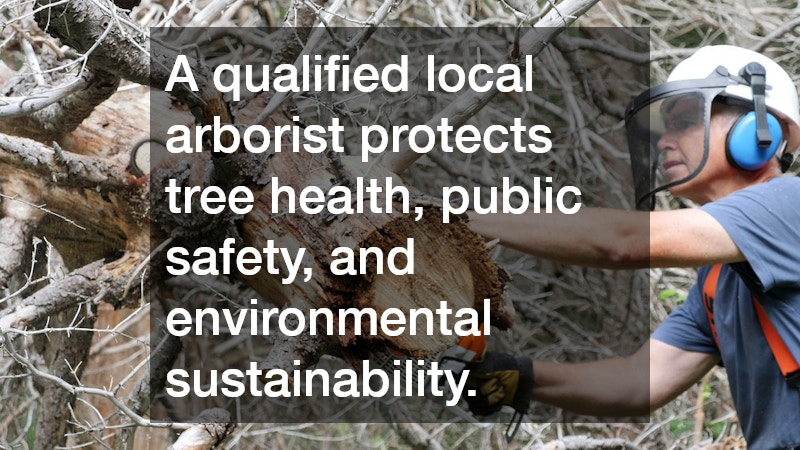
Ultimately, working with a qualified local arborist protects tree health, public safety, and environmental sustainability. Professional arboriculture ensures trees continue to provide long-term ecological and aesthetic value while reducing preventable risks to property and people. Beyond individual trees, arborists contribute to stronger neighborhoods by preserving shade, improving air quality, and supporting wildlife habitats.
A local arborist also brings valuable regional insight, understanding how climate, soil conditions, and local regulations affect tree care decisions. This localized expertise allows for proactive maintenance rather than reactive fixes, saving time and long-term costs. By investing in professional tree care, property owners support healthier landscapes, safer communities, and a more resilient natural environment for future generations.