Trees can add shade, privacy, curb appeal, and character to a property, but they also require regular attention. A mature tree can take decades to develop, and its condition can change gradually because of weather, disease, insects, soil changes, construction, or natural aging.
A practical maintenance plan starts with observation. Walk the property several times each year, especially after strong winds or heavy storms, and look for changes in the trunk, canopy, roots, and surrounding soil. Keep notes or photos of large trees so you can compare their condition over time.
It also helps to know when a situation has moved beyond routine observation. Large limbs, trees near structures, visible decay, and sudden leaning deserve professional evaluation.
Inspect Trees Regularly for Changes and Warning Signs
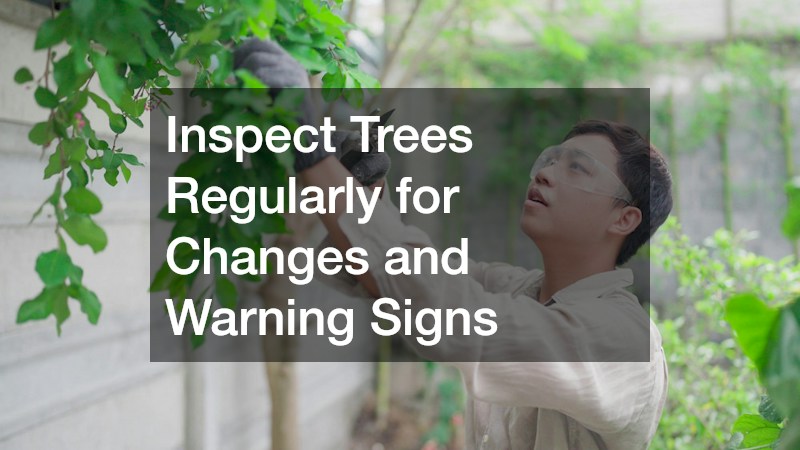
Healthy-looking trees can still develop structural or biological problems, so regular visual checks are worthwhile. Start with the overall canopy. Look for areas that appear unusually thin, sections that leaf out later than the rest of the tree, or branches that remain bare during the growing season. Compare one side of the tree with the other and note whether the change is new.
Then look at the trunk and major branches. Cracks, cavities, peeling bark, fungal growth, broken limbs, or areas where two large stems are separating can all deserve attention. Changes near the base can be important as well. Soil heaving, exposed roots, mushrooms, or a new lean may indicate that something has changed below ground.
A consistent tree care routine should include observations such as:
- Dead, broken, or hanging branches
- New cracks in the trunk or major limbs
- Sudden or increasing lean
- Sparse foliage or unusual leaf loss
- Cavities, decay, or fungal growth
- Root damage from construction or landscaping
- Soil movement around the base
- Branches rubbing against buildings or other trees
Not every unusual feature means a tree is unsafe. Some mature trees naturally have cavities, uneven crowns, or large surface roots and remain stable for years. The value of routine checks is that they help you recognize change.
When something looks different, a local arborist can provide a more informed assessment of the tree’s health and structure. Professional evaluation is particularly useful for large trees near homes, driveways, walkways, utility areas, or frequently used outdoor spaces. An arborist can consider the entire tree rather than focusing on one visible symptom.
Keep records when professional evaluations are performed. Note which trees were inspected, what recommendations were made, and whether follow-up work was suggested.
Property owners should also consider the surroundings. Recent grading, trenching, new patios, driveway work, or changes in drainage can affect roots even if the canopy still looks normal. Mention recent construction or landscaping work during a professional evaluation because those details may help explain changes in tree condition.
Prune Trees Before Overgrowth Creates Larger Problems
Pruning is most effective when it has a clear purpose. Rather than cutting branches simply because a tree looks large, focus on dead wood, damaged limbs, clearance problems, crossing branches, or growth that is interfering with structures and frequently used areas.
Branches can gradually extend toward roofs, siding, walkways, fences, parking areas, and neighboring trees. Growth that seems harmless one year may create clearance problems later. Regular observation makes it easier to address individual limbs before the situation becomes more complicated.
Common reasons to consider professional pruning include:
- Removing dead or damaged branches
- Improving clearance over roofs or driveways
- Reducing interference with buildings
- Addressing limbs damaged by storms
- Managing crossing or rubbing branches
- Improving access beneath the canopy
- Correcting selected structural problems in younger trees
Tree trimming companies should be able to explain what they plan to remove and why. Ask whether the proposed work is intended to improve clearance, remove defects, manage storm damage, or accomplish another specific goal. A clear explanation is more useful than a vague recommendation to “trim everything back.”
Over-pruning can create its own problems. Removing too much live growth at once can change the appearance and balance of a tree, while improper cuts may lead to weak regrowth or unnecessary stress. Large mature trees also involve significant height and branch weight, making this work inappropriate for casual homeowner experimentation.
A local tree service can help establish a reasonable maintenance schedule based on the species, size, age, condition, and location of the trees on the property. Some trees may need occasional corrective work, while others may go several years between professional pruning visits.
Routine pruning can often be planned in advance and coordinated with other landscaping work. This gives property owners more flexibility with timing and budgeting.
Before work begins, move vehicles, furniture, and movable objects away from the work area when requested. Ask how debris will be handled and whether wood, chips, or branches will remain on site. Clarifying cleanup expectations ahead of time prevents confusion once pruning is complete.
Know When Removal Is Safer Than Preservation
Many property owners prefer to keep mature trees whenever reasonably possible, but there are circumstances in which removal becomes the more practical choice. Extensive structural failure, advanced decline, severe storm damage, or conflicts with construction may leave few realistic alternatives.
Removal decisions should be based on the condition and location of the tree rather than appearance alone. A tree with sparse foliage may be treatable, while another tree that still has a green canopy may have serious structural defects. This is why professional assessment is useful before making a major decision.
A tree removal service may be appropriate when a tree has:
- Severe trunk or root damage
- Major splitting or structural failure
- Extensive storm damage
- Significant decline with little chance of recovery
- An unstable position near occupied areas
- Unavoidable conflicts with planned construction
- Damage that makes continued retention impractical
The surrounding property affects how complicated the work will be. A tree standing in an open field presents a different situation from one positioned between a house, driveway, fence, and neighboring property. Large limbs may need to be lowered in sections, and access for equipment may be limited.
A local tree contractor should inspect the site before substantial removal work and explain the proposed approach. Ask what is included in the estimate and what will remain after the tree is gone. Some quotes cover only cutting and removal, while stump work, hauling, or additional cleanup may be separate.
Questions worth asking include:
- Is debris removal included?
- Will logs or wood chips remain?
- Is stump work part of the proposal?
- How will nearby landscaping be protected?
- Does equipment need access through a gate or lawn?
- Are there structures or utilities that affect the approach?
- What cleanup will be completed afterward?
Do not assume the lowest estimate represents the same scope of work as a higher one. Compare the entire proposal, including cleanup, equipment needs, access considerations, and any follow-up work.
After removal, decide how the former tree area will be handled. A remaining stump may interfere with mowing or new landscaping, while disturbed soil may require grading, topsoil, or reseeding. Planning the final condition of the area helps avoid ending the project with an unfinished section of yard.
Prepare for Storm Damage and Tree Emergencies
Severe weather can change tree conditions within minutes. High winds, saturated soil, ice, lightning, and heavy snow can break branches, split trunks, or cause trees to lean or fall. Property owners should know what to do before a storm so they are not making every decision during an emergency.
Start by identifying large trees near bedrooms, driveways, roads, power lines, and frequently used areas. If a tree already has visible defects, schedule an evaluation before severe weather is expected whenever possible.
After a storm, keep your distance from trees that are leaning, split, suspended, or tangled with utility lines. Branches under tension can move unexpectedly, and partially fallen trees may shift as weight changes. Do not climb, pull, or cut damaged limbs yourself.
Situations that may justify contacting local emergency tree services include:
- A tree resting on a house or other structure
- Large branches hanging over occupied areas
- A newly leaning tree near a building
- A split trunk or major structural break
- Trees blocking essential access
- Storm damage affecting several large limbs
Utility lines require additional caution. Treat any downed or damaged line as dangerous and keep people and pets away from the area. Follow the instructions of the utility provider and emergency authorities before approaching affected trees.
In some cases, emergency tree removal may be necessary to restore access or address an immediate hazard. These projects can be more complicated than planned removals because the tree may already be unstable, resting on another object, or under unusual tension. Specialized equipment, rigging, or controlled cutting may be required.
Prepare before storm season by keeping contact information for qualified professionals in an accessible place. Photograph valuable mature trees and major landscape features periodically. After damage occurs, take photos from a safe distance before cleanup if documentation may be needed for insurance or property records.
Keep invoices, estimates, and photographs after emergency work. These records can help document what happened, what was removed, and what follow-up work may still be needed once the immediate hazard is gone.
Choose Qualified Professionals for Ongoing Property Needs

The quality of professional work can affect both the appearance of the landscape and the long-term condition of the trees. Choosing a provider should involve more than calling the first number that appears in a search or accepting the lowest estimate without comparing details.
Start by looking at experience with projects similar to yours. A company that primarily handles small ornamental pruning may not be the best fit for a large technical removal, while a company focused on removals may not be the ideal choice for long-term management of valuable mature trees.
When comparing local tree companies, ask about:
- Experience with similar trees and properties
- Insurance coverage
- Equipment appropriate for the proposed work
- Cleanup procedures
- Scheduling expectations
- Written estimates
- How changes to the scope are approved
- Whether stump work is included when applicable
A written estimate should identify which trees or branches are included and describe the work clearly enough that you can compare proposals. Avoid relying only on a total price. Two estimates may look similar while including very different amounts of pruning, hauling, stump work, or cleanup.
Professional tree services are also easier to manage when you keep an ongoing record of previous work. Note when major trees were pruned, which limbs were removed, when damage occurred, and what recommendations were made. This information becomes useful when a different professional evaluates the property later.
Communication is another important factor. A qualified provider should be willing to explain why work is recommended and answer reasonable questions about the process. You should understand what will happen, which areas of the property need to remain clear, and what the site should look like when the crew leaves.
Build relationships before emergencies arise. Having a provider you have used successfully for routine work can simplify decisions after a storm or when an urgent problem develops.
Build a Long-Term Plan for Safer Trees
Trees are long-term property features, and their maintenance should be approached with the same kind of planning used for roofs, drainage, driveways, and other major parts of a home. Regular observation allows owners to notice changes early, while professional evaluations can provide perspective when a condition is difficult to interpret.
Walk the property seasonally and after significant storms. Keep photographs of large or valuable trees, document major work, and save invoices and recommendations. When multiple projects are needed, prioritize immediate safety concerns first and schedule routine maintenance separately.
It is also wise to budget for mature trees before urgent work is required. Large pruning projects and removals can be significant expenses, and setting aside funds gradually makes those decisions easier to manage.
The goal is not to remove every imperfect tree or react to every broken twig. It is to understand what is normal for the property, recognize meaningful changes, and respond appropriately. With consistent observation, organized records, and timely professional help, property owners can preserve healthy trees, address developing hazards, and maintain outdoor spaces that remain attractive, functional, and safer overall over time.