Trees add tremendous beauty, shade, and value to any residential property, often standing as steady landmarks for decades. However, like any living organism, trees eventually reach the end of their natural life cycle or suffer severe damage from disease, severe weather, and environmental stress. A declining or structurally compromised tree poses a serious safety hazard to your home, power lines, and family. Knowing how to recognize the early warning signs of a dying or hazardous tree helps you take action before an unexpected limb drop or full collapse causes costly property damage. Learning to spot these subtle structural changes early gives you time to plan ahead rather than reacting during a storm.
Identifying whether a tree can be saved through selective pruning or if it requires complete removal requires a careful inspection of its trunk, canopy, and root structure. While some signs of decline develop gradually over several seasons, others demand immediate professional attention. Understanding what to look for empowers you to make informed decisions about your property’s landscape and safety.
Inspecting the Canopy and Foliage Health
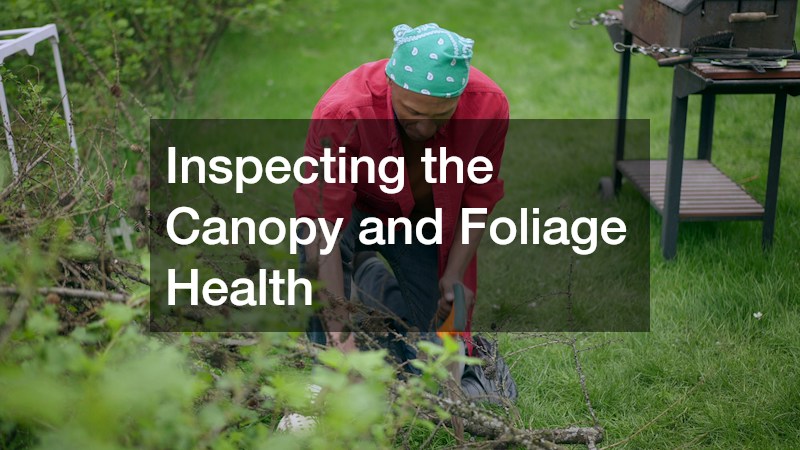
The overall appearance of a tree’s upper canopy provides some of the clearest clues regarding its internal health and vitality. During the active growing season, a healthy tree displays full, vibrant foliage spread evenly across its branches. If you notice large sections of the canopy remaining bare while surrounding branches leaf out, the tree is likely experiencing severe vascular distress or root failure.
In addition to bare branches, pay close attention to premature leaf discoloration, unusually small leaves, or early leaf drop in late summer. A dying tree often exhibits dieback, a condition where individual branches die from the tips inward toward the trunk. Observing dead branches concentrated on one side of the crown often indicates localized root or vascular damage. When dead branches account for more than a third of the overall canopy, the tree’s structural integrity is compromised. At this stage, consulting an arborist to plan for professional tree removal is often the safest path forward to prevent falling deadwood.
Examining the Trunk for Cracks and Decay
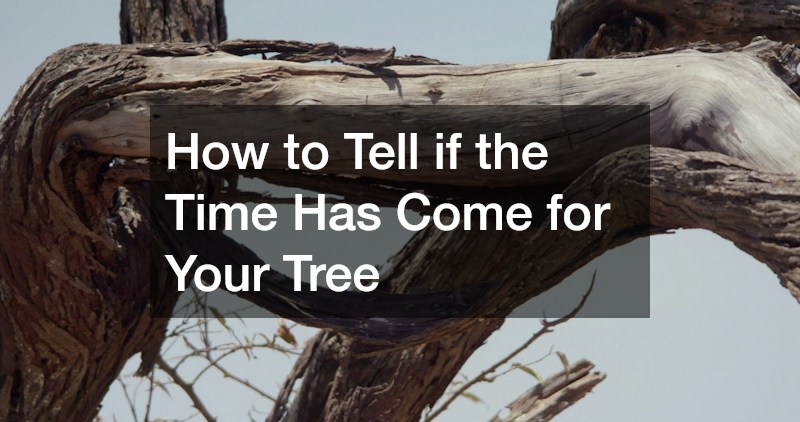
The trunk serves as the main structural column supporting the entire weight of the tree’s heavy branch network. Inspecting the bark and main trunk can reveal hidden structural weaknesses that jeopardize the entire tree. Healthy bark should feel firm and intact, protecting the living layers beneath. If you notice large areas where bark is peeling off easily, or if you discover deep vertical cracks extending into the trunk, the tree has lost significant structural strength.
Internal decay is another major red flag that often manifests on the exterior of the trunk. Look for fungal growth, such as mushrooms or shelf brackets, sprouting from the base or lower trunk. These fungi feed on decaying wood inside the core, leaving the tree hollow and vulnerable to windthrow. Severe hollows do not always mean a tree will fall immediately, but if the outer shell of sound wood is thin, scheduling timely tree removal is essential to protect nearby structures.
Evaluating the Root Zone and Soil Stability
A tree’s stability depends entirely on a strong, healthy root system anchoring it firmly into the soil. Because most roots are buried beneath the surface, identifying root issues requires observing the soil immediately surrounding the base of the trunk. A tree that has suddenly developed a noticeable lean, particularly after a severe storm, is often experiencing acute root failure and should be addressed immediately.
Examine the ground around the root flare for signs of soil heaving, cracking, or raised soil mounds on the side opposite the lean. These visual cues indicate that the anchor roots have snapped or pulled free from the earth. Additionally, construction activity, soil compaction, or recent trenching near the drip line can sever vital roots, leading to a slow physical decline. When root anchoring fails, prompt intervention prevents a sudden, catastrophic collapse during high winds.
Balancing Safety Risks and Professional Assessment
Deciding to remove a mature tree is rarely easy, but safety must always take precedence over aesthetic preferences. A standing dead or severely decayed tree positioned near your roofline, driveway, or children’s play area represents a constant risk. Monitoring weather conditions and recognizing when a tree can no longer withstand seasonal storms helps you proactively manage your landscape before an emergency occurs.
While minor pruning can prolong the life of a struggling tree, structural instability, deep trunk decay, and widespread root damage are generally irreversible. When a tree poses an unacceptable safety risk, partnering with licensed tree service professionals ensures that the tree removal process is performed safely and efficiently. Removing a hazardous tree also provides an opportunity to replant a healthier, better-suited species for future generations to enjoy. Timely removal eliminates safety hazards, protects your property investment, and creates space for healthy new growth to flourish in your yard.